



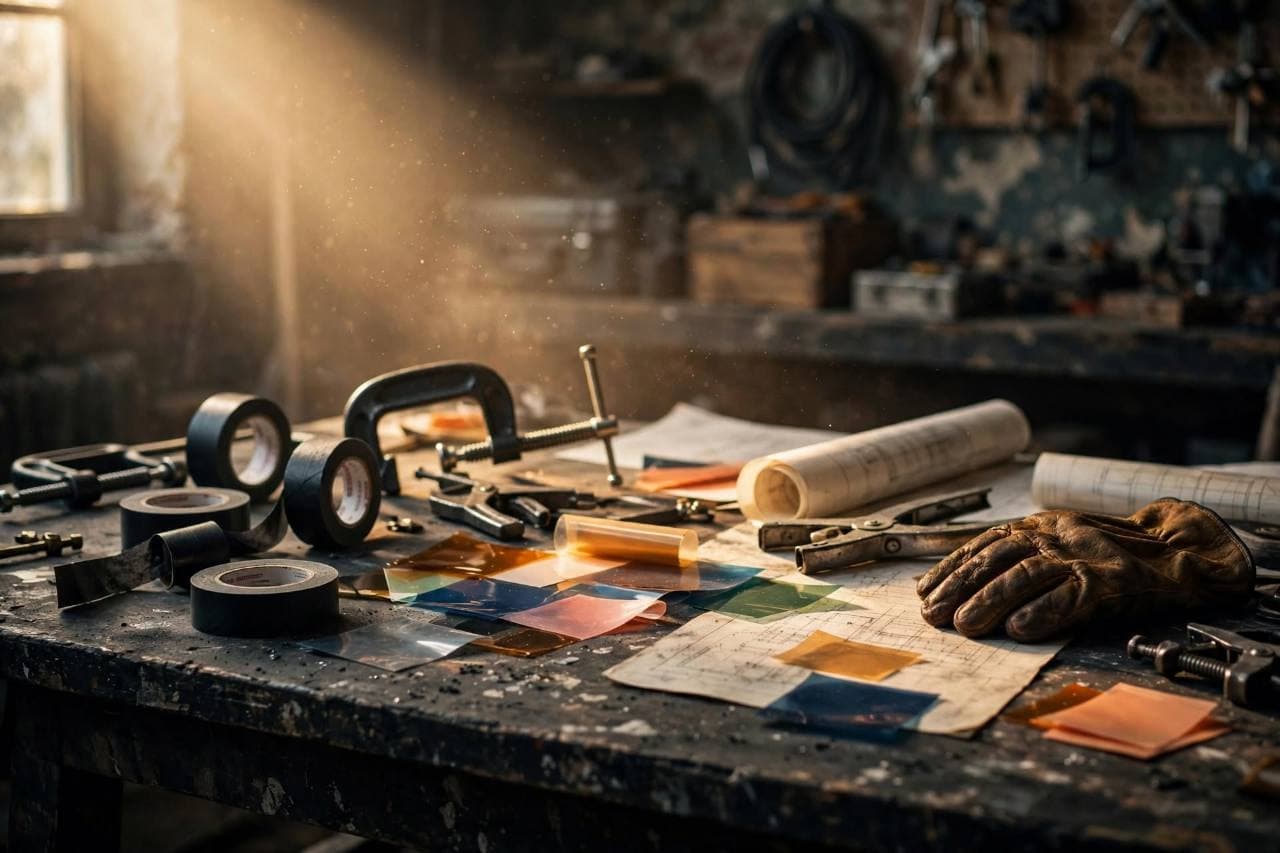
Turning words into a world
A production designer begins with the script and asks what the story should feel like before a camera records it. Period, architecture, colour, texture, geography and character all become practical design questions. The designer develops that visual idea with the director and cinematographer, then communicates it to the art department and neighbouring departments.
The work is creative and managerial at the same time. A beautiful idea must fit the budget, schedule, locations, construction capacity, safety rules and the physical needs of camera, lighting, costume, effects and performers.
A department, not a lone artist
On a large production, supervising art directors, art directors, draughtspeople, set decorators, buyers, graphic artists, construction teams and runners turn the design into sets and dressed locations. The exact structure changes with country, format, budget and union practice.
That is why the role depends on communication. The production designer protects one coherent visual language while specialists solve hundreds of detailed problems.
A route into the craft
There is no single ladder. People arrive through architecture, theatre design, fine art, graphics, set decoration or art-department assisting. A useful early portfolio shows observation, research, spatial thinking and the ability to develop an idea within constraints—not only polished final images.
The title may sit near the top of the credits, but the craft is visible everywhere: in the width of a doorway, the wear on a wall and the colour that quietly carries a character from one scene to the next. Production design works when the audience believes in the world before it notices who built it.